
MISU
A Korean Tradition of Roasted Grains and Beans
Long before misu became familiar as a cold grain drink, it was a way of transforming harvested ingredients into food that could last.
Grains were cooked or steamed, dried, roasted, and finely ground. Methods differed according to the ingredient and household, but the underlying idea was practical: once prepared and dried, the food could be stored, carried, and eaten without cooking another meal.
Over centuries, Koreans used several names for foods of this kind, including misi, misik, misu, and eventually misutgaru, the powdered form most familiar today.
Yet misu was never defined by one grain or one fixed recipe.
It was closer to a way of working with ingredients.
That idea is where the contemporary MISU begins.
Before MISU, there was misi
The history of the word reaches back centuries.
In Hunmong Jahoe, a Korean character-learning book published in 1527, the Korean word misi appears in connection with Chinese characters used for roasted or dried grain foods. Historical documents also use the term misik (糜食), alongside characters such as 麨 (cho) and 糗 (gu).
The names changed over time, but the principle remained remarkably consistent:
prepare the harvest, remove moisture, grind it finely, and make it ready to eat again whenever it is needed.
Seen this way, misu is not simply an old Korean beverage. It belongs to a much broader tradition of transforming grains into portable, durable food.
Food made for time and distance
In premodern Korea, this quality made misu particularly useful.
Roasted and ground grain could be carried on journeys, stored for emergencies, and eaten without lighting a fire. Historical records describe forms of misik being prepared as military provisions and used as relief food in times of scarcity.
Its value came from a remarkably simple transformation.
The harvest was made lighter, more durable, and immediately accessible.
Seo Yu-gu, one of the most important Korean scholars of practical life in the nineteenth century, emphasized precisely this quality. Writing about cho (麨), he noted that it could be eaten without making another fire and was therefore useful when travelling long distances or going into the mountains.
This practical intelligence sits at the heart of the tradition.
But practicality was only part of the story.
When preservation became flavor
Heat did more than preserve an ingredient.
Roasting also changed its aroma.
Grains and beans developed the warm, toasted fragrance Koreans describe as gosohan mat — a sensory quality somewhere between nutty, roasted, savory, and gently sweet, but difficult to translate exactly into English.
The same process that helped food last longer also made it taste different.
This is one of the most enduring qualities of misu.
Preservation became aroma.Aroma became flavor.
For contemporary MISU, roasting remains important for the same reason: not simply as a processing technique, but as a way of revealing a grain or bean’s character.
From provisions to a summer cup
Misu also developed another life.
Mixed with cold water and often sweetened with honey, it became a familiar summer food. Depending on how much water was added, it could be drunk lightly or eaten more thickly.
Historical writing describes finely ground powder mixed with fragrant honey and cool spring water — something that could ease both thirst and hunger during hot weather.
This evolution is significant.
A food valued for storage and portability also became a food enjoyed for texture, aroma, and refreshment.
The history of misu therefore moves between necessity and pleasure.
It could sustain someone on a journey, yet it could also be a carefully prepared summer drink.
That dual character — useful and pleasurable, simple and sensory — remains part of what makes misu distinctive.
Seo Yu-gu and the world of cho
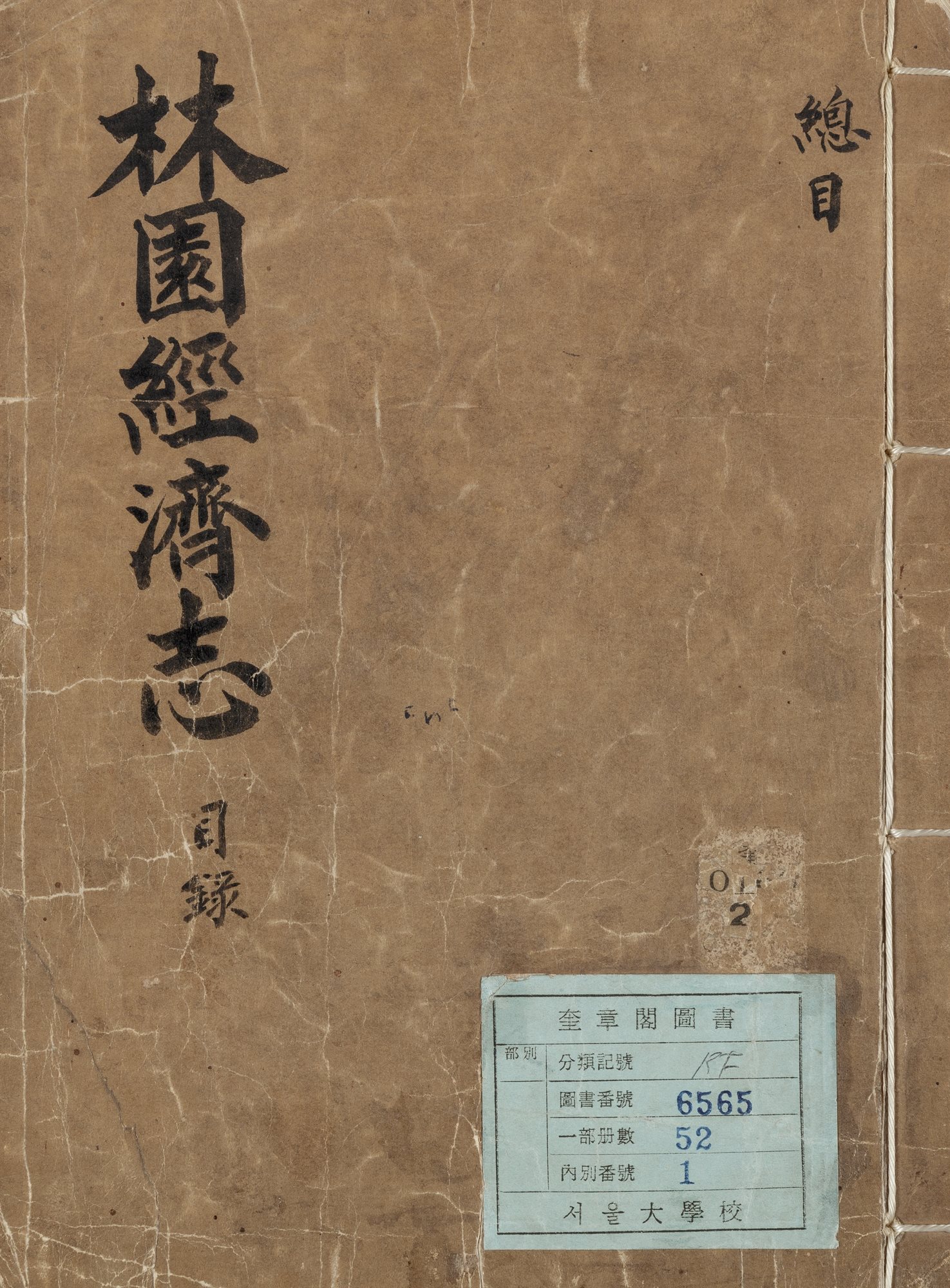
One of the richest historical records of this culture appears in Seo Yu-gu’s Imwon Gyeongjeji (林園經濟志), an extensive nineteenth-century encyclopedia of everyday life.
Its section devoted to food and cooking, Jeongjoji (鼎俎志), contains a category called 麨 (cho), translated in modern Korean editions as misutgaru.
Seo Yu-gu explains the term in relation to roasting and notes the aroma produced through the process. He also writes that Koreans called this kind of food misik.
More importantly, his records show that cho was not one standardized preparation.
There were many.
Not one recipe, but many ingredients
The Jeongjoji records a series of preparations under the category of cho.
Among them are glutinous-rice cho and pea cho, alongside preparations involving ingredients such as Job’s tears, Chinese yam, lotus seeds, water caltrop, fruits, and other plants.
Some used one principal ingredient.
Others combined several.
This makes an important point about the history of misu:
its identity was never dependent on a single recipe.
The tradition could accommodate different ingredients according to place, season, availability, purpose, and taste.
Even legumes appear within this historical world. The inclusion of pea cho (豌豆麨) is particularly revealing because it shows that the culture surrounding misu was not limited strictly to cereal grains.
Grains and legumes could both be transformed through similar thinking.
This is why, for MISU today, grain and bean belong naturally beside one another.
Single varieties and combinations
Seo Yu-gu’s records also reveal another interesting duality.
Some preparations foregrounded a particular ingredient, while others brought multiple ingredients together.
That logic remains surprisingly contemporary.
A single grain can be interesting because of its own variety, place of cultivation, aroma, texture, and flavor.
A combination can be interesting because ingredients change one another.
Neither approach is more traditional than the other.
Both already existed within the wider culture surrounding misu.
This is an important starting point for MISU today.
Our VARIETAL series focuses on individual Korean heirloom grains and beans, allowing the character of one variety to come forward.
Other expressions, such as MISU COFFEE and MISU CACAO, explore unexpected pairings — asking what happens when the roasted character of a Korean grain or bean meets another ingredient.
The two approaches are different, but they begin with the same question:
What does this ingredient taste like, and what more can it become?
A tradition of transformation
Seen across this history, misu can be understood through a sequence of transformations:
harvest → heat → drying → grinding → storage → a new way of eating
Each step changed the ingredient.
Heat produced aroma.Drying extended its life.Grinding changed its texture.Powder made it portable.Water brought it back to the table in another form.
This is why describing misu simply as “Korean grain powder” misses much of its meaning.
It is better understood as a food culture built around transformation.
And because that transformation could be applied to different grains, beans, seeds, and plants, misu remained open rather than fixed.
MISU, THEN AND NOW
MISU does not attempt to reproduce a single historical recipe.
Instead, it begins with an idea that has existed in Korean food culture for centuries:
an ingredient can be transformed through heat and grinding, preserved in another form, and experienced again through a cup.
Historically, this approach made grains easier to store and carry.
Today, we use it to look more closely at flavor.
We work with Korean heirloom grains and beans, paying attention to the differences between varieties — where they are grown, who grows them, how they respond to roasting, and what kind of aroma and texture each can create.
Sometimes we let one variety stand on its own.
Sometimes we bring it into an unexpected pairing.
What connects them is not a fixed recipe, but a way of thinking inherited from the long history of misu.
From preservation to gastronomy
For centuries, misu transformed agricultural ingredients so that they could travel farther and last longer.
MISU asks how that same principle of transformation can create a contemporary gastronomic experience.
We are interested not only in what a grain is, but in the relationships around it:
the variety, the producer, the place where it grows,the way it is roasted,and the person who eventually tastes it.
This is where the old practice and the contemporary brand meet.
Not through the reproduction of the past, but through a continuing attention to ingredients.
The tradition of misu is not one recipe.
It is a way of understanding what grains and beans can become.
MISU continues that question today.